Treasury Secretary Janet Yellen on Tuesday gave her strongest endorsement yet of the idea of using frozen Russian assets to fund the war in Ukraine.
But at a press conference from Sao Paulo, Brazil, ahead of the Group of 20 finance minister meeting, she did mention there’s an alternative idea: using those frozen Russian assets as collateral for borrowing.
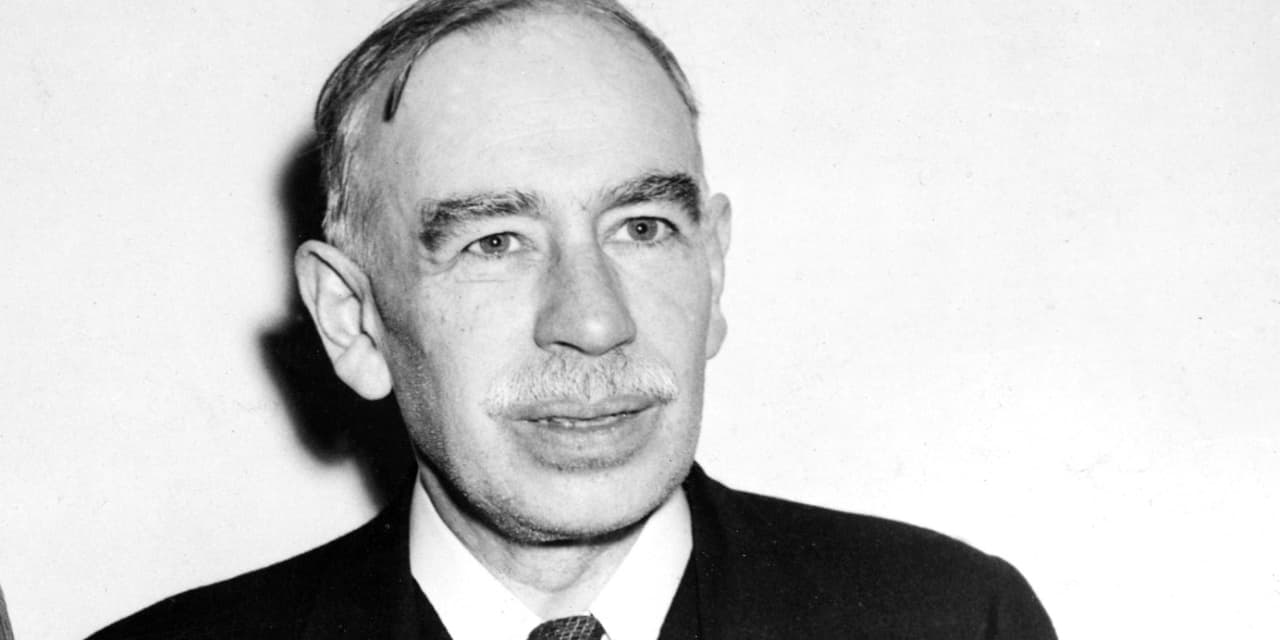
It’s an idea pushed by Belgium. And, according to RSM chief economist Joe Brusuelas, it would be the alternative that renowned economist John Maynard Keynes would’ve taken.
Keynes, who in 1946 met his long-term forecast of dying, is obviously no longer around for consultation. But Brusuelas noted that Keynes was tasked with helping to resolve the global financial crisis when the Bank of England lost two-thirds of its gold reserves in a week due to the outbreak of World War I.
Keynes, in an innovation at the time, urged the suspension of rules that required a fixed ratio of gold reserves to the volume of notes in circulation. “Keynes’s innovative plan to reflate the financial system through the issuing of new paper, while using gold for foreign payments, prevented a financial collapse and created the conditions for wartime funding,” says Brusuelas.
And in fact, the U.K. did maintain its foreign gold commitments after the crisis.
Keynes, says Brusuelas, would back this new innovation.
“In our estimation, Keynes would have recognized the idea as efficient and appropriate, and in keeping with the rules-based economic order that has governed global economics for the past several decades,” he writes.
An advantage of borrowing but not seizing is that it would still provide an incentive for Russia to end the war and regain access to its reserves, which total some $300 billion. Most of those assets are actually in Belgium, at Euroclear. Russia meanwhile still has Western assets it could seize.
In the borrowing scenario, Ukraine would issue bonds to buy ammunition, missiles, tanks and other Western-made products.
The benefits, says Brusuelas, is first that it would provide Ukraine with much needed weaponry. But it also would help “revive the Western defense industrial base and send a compelling message of deterrence to China, Iran and Russia,” he says. Also, it would be a timely boost to the European — and in particular, German — economy.
One last benefit of such a move, says Brusuelas, is that it would not jeopardize the reserve status of the dollar and euro. Yellen, at her press conference, said that wasn’t a very strong risk anyway because there aren’t obvious alternatives.
Keynes, noted Brusuelas, correctly predicted that the harsh conditions imposed on Germany after World War I would reverberate.
“Keynes would almost certainly be against the outright confiscation of Russian reserves or significant wartime reparations designed to cripple the Russian postwar economy,” he said. “One of the major lessons learned during the 20th century was that the unrestricted confiscation of the spoils of war and punitive reparations ended with the disastrous outcome of the Treaty of Versailles and everything that followed.”
This post was originally published on Market Watch