The FTSE 100 plummeted on Friday morning following news that a new Covid-19 variant has been identified in Southern Africa. So what are the chances that this unfortunate event will spark a stock market crash? Let’s take a look.
What happened with the FTSE 100?
The FTSE 100 fell by 240 points when markets opened on Friday morning. This fall of more than 3% means £65 billion was wiped off the value of some of the UK’s biggest companies.
While the FTSE 100 is still more than 8% higher than it was at the start of the year, Friday’s drop is one of the biggest daily slumps the share index has experienced in 2021.
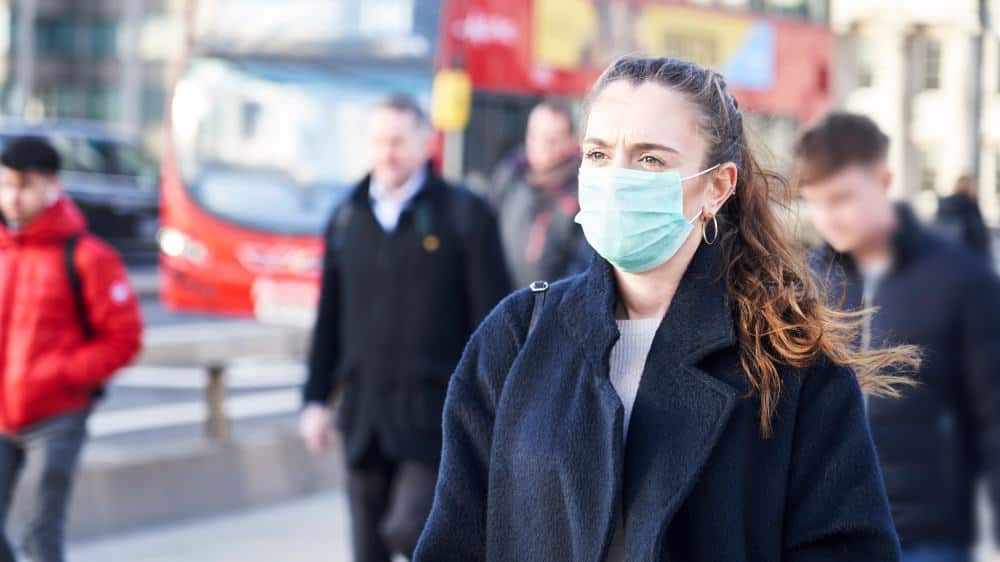
The drop has been attributed to a new Covid-19 variant that has already been dubbed the ‘worst ever’ mutation. According to reports, the B.1.1.529 variant discovered in Southern Africa has 32 mutations in its ‘spike protein’. As a result, there are growing fears that vaccines will be less effective against it.
Which companies have been hit the hardest?
The biggest FTSE 100 fallers on Friday morning were airline companies. IAG, the owner of British Airways, saw its share price fall by more than 20%. On a similar note, EasyJet’s share price slumped by more than 15%.
These movements are perhaps unsurprising, given that the UK government has already reacted to the new Covid-19 strain by cancelling flights arriving into the UK from a number of Southern African countries.
Following the new ‘red list,’ many investors are clearly fearful that other countries will be added to it in the future.
Other companies connected to the travel industry that witnessed significant falls in their share prices included aeroplane engine maker Rolls-Royce, Intercontinental Hotels, and Whitbread PLC, owner of the Premier Inn chain of hotels. All three of these companies saw their share prices slump by more than 5% on Friday morning.
Other big fallers included BP and Shell. Both of these oil giants have enjoyed a stellar 2021 so far, with their respective share prices climbing by over 20% since the turn of the year. However, investors are clearly concerned that the new Covid-19 variant will hamper economic growth and consequently slow the global demand for oil.
Interestingly, two FTSE 100 companies did buck the trend on Friday morning: Ocado and Royal Mail. However, those worried about the new covid strain are unlikely to take satisfaction from this. That’s because both of these companies did well during previous lockdowns when the UK’s appetite for online deliveries grew substantially.
Is the UK set for a stock market crash?
Close followers of the FTSE 100 will tell you that drops of more than 3%, while disappointing, aren’t uncommon.
However, it is worth bearing in mind that Friday’s slump may be unlike other drops experienced in 2021. That’s because many believe that the FTSE 100’s 240 point drop may just be the beginning, especially if the new variant spreads globally.
For example, when Covid-19 first grabbed the world’s attention back in January 2020, the FTSE 100 had a mild reaction, dropping from a high of 7,674 on 17 January 2020, to 7,286 by the end of the month. It was only by mid-February that investors realised the severity of the situation, and the FTSE 100 tanked as a result. By the end of February 2020, the share index had fallen to 6,580. And by 20 March 2020, it had fallen to 5,190.
While investors will hope the new variant won’t have the same enormous impact on global stock markets, it’s certainly a possibility. This is why the share index fell by 3% on Friday morning in order to ‘price in’ this risk. That being said, should the new variant pass swiftly, or not be as harmful as feared, then it’s also entirely possible the FTSE 100 will rise again over the coming months.
Whatever happens with the new Covid-19 variant, it is likely that investors are in for a volatile period.
Keen to learn more about the FTSE 100 and investing? Take a look at the Motley Fool’s guide to investing basics. If you’re planning to invest, see our list of top-rated share dealing accounts.
Was this article helpful?
YesNo
About the author

Karl is a writer specialising in investing and personal finance content. He regularly contributes articles on savings, bank accounts, mortgages, and loans. He was previously a Personal Finance Writer for MoneySavingExpert.
Some offers on The Motley Fool UK site are from our partners — it’s how we make money and keep this site going. But does that impact our ratings? Nope. Our commitment is to you. If a product isn’t any good, our rating will reflect that, or we won’t list it at all. Also, while we aim to feature the best products available, we do not review every product on the market. Learn more here. The statements above are The Motley Fool’s alone and have not been provided or endorsed by bank advertisers. John Mackey, CEO of Whole Foods Market, an Amazon subsidiary, is a member of The Motley Fool’s board of directors. The Motley Fool UK has recommended Barclays, Hargreaves Lansdown, HSBC Holdings, Lloyds Banking Group, Mastercard, and Tesco.
This post was originally published on Motley Fool