Pharmaceutical giant AstraZeneca will tap renewable natural gas made from cow manure and food waste to sharply reduce its carbon footprint at U.S. operations starting now and over the next few years, the company announced Tuesday.
AstraZeneca
AZN,
is partnering with Vanguard Renewables to deliver renewable natural gas (RNG) to all of the U.K.-based company’s U.S. medicine manufacturing and distribution sites by the end of 2026. RNG purchases begin this month for a Newark, Del., campus where the company packages 26 medications.
The companies estimate that by 2026, the collaboration will enable as much as 190,500 megawatt hours (MWh), or 650,000 million British thermal units (MMBTu), per year of renewable natural gas to be used across AstraZeneca’s U.S. sites. That’s the same energy required to heat more than 17,800 U.S. homes for a year.
Read: Biden wants more rural utilities to tap renewable energy, carbon capture
RNG is essentially biogas (the gaseous product of the decomposition of organic matter) that has been processed to purity standards that replicate traditional natural gas, according to the Department of Energy. Like conventional natural gas
NG00,
RNG can be used as a transportation fuel in the form of compressed natural gas or liquefied natural gas. RNG’s production and distribution can also use much of the existing natural gas infrastructure.
Critics of RNG argue that too much cost goes into its so-far small-scale development as an “energy transition” fuel when the demands of climate change require the global economy to shift more quickly to wind, solar, nuclear and other energy sources that essentially don’t pollute by design. RNG backers, including many traditional energy companies, say transition fuels are necessary because an advanced global economy won’t dump fossil fuels overnight.
Related: Honeywell has a mile-high use for the leftover ethanol as EVs replace gas cars
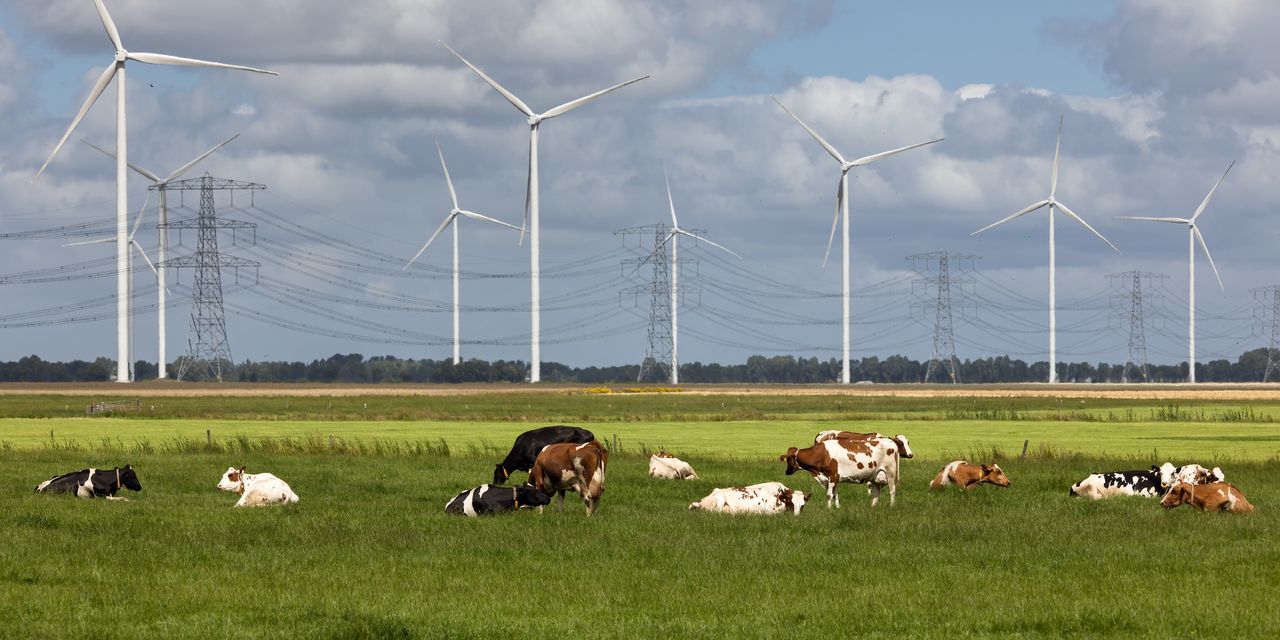
To source their RNG, AstraZeneca and Vanguard Renewables will work with dairy farmers and food and beverage manufacturers, retailers and distributors to produce the fuel source using farm-based anaerobic digestion from food and dairy cow manure.
By capturing methane from dairy operations that would have otherwise ended up in the atmosphere, this partnership also enhances the sustainability of the farming sector, said officials at Vanguard Renewables, which has been working with multi-
generational dairy farms and food and beverage manufacturers since 2014.
“We recognize the interconnection between the health of people and the health of the planet, and are committed to driving deep decarbonization across all of our operations,” said Pam Cheng, executive vice president of global operations and IT, as well as chief sustainability officer at AstraZeneca.
She sees the renewable natural gas contracts as part of a longer-run transition to net-zero carbon emissions across health systems and the embrace of a circular economy that turns waste and excess energy back into use.
AstraZeneca CEO Pascal Soriot has said previously that cutting healthcare sector emissions is a top priority. His recent op-ed declared the climate emergency to be the biggest health crisis of our time. There has been a rise in chronic diseases linked to air pollution, and evidence suggests it’s associated with many types of cancer, too.
Related: When air quality declines, low-income people and communities of color suffer the most
The healthcare sector accounts for nearly 9% of U.S. greenhouse gas emissions. The pharma sector has been reported to produce more emissions than the auto industry, by some measures.
AstraZeneca said it is on track to reduce the greenhouse gas (GHG) emissions responsible for global warming from its global operations by 98% by
2026 from a 2015 baseline, and by 2030, AstraZeneca aims to halve its entire value chain footprint on the way to becoming science-based net zero by 2045 at the latest. The use of RNG at AstraZeneca sites in the U.S. will further enable the company’s transition to 100% renewable energy for heat and power.
Net zero programs have dominated corporate headlines in just the last few years. Net zero means cutting greenhouse gas emissions to as close to zero as possible. That’s typically achieved via cleaner energy alternatives and by offsetting emissions with carbon-market credits purchased from less-polluting companies or by efforts that make sure any remaining emissions are re-absorbed from the atmosphere with restoring forests, for example.
“AstraZeneca set a very ambitious and challenging net-zero target which is a
benchmark for their sector and other global corporations. We strongly believe this
partnership will provide a path for other like-minded companies to join us on the journey towards global decarbonization,” said Neil H. Smith, CEO of Vanguard Renewables.
This post was originally published on Market Watch