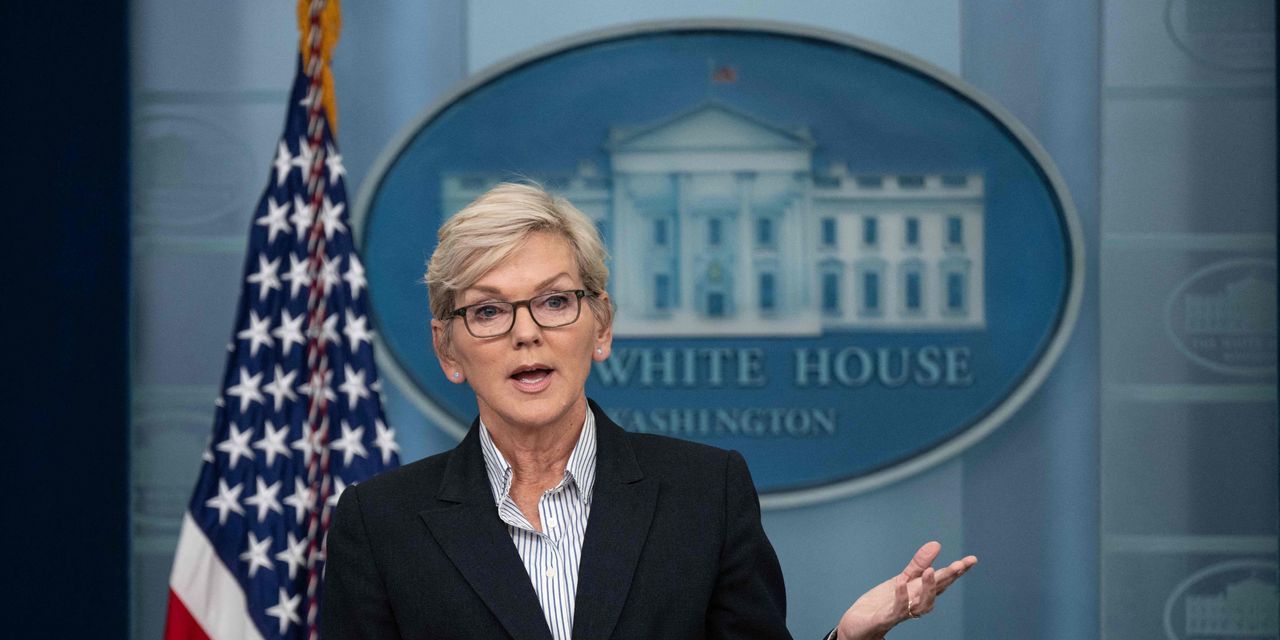
Energy Secretary Jennifer Granholm last month said it would be difficult for the U.S. to take advantage of low oil prices to replenish the Strategic Petroleum Reserve because of maintenance at two of the four sites.
The Financial Times reported, citing people familiar with Saudi Arabia’s thinking, that Riyadh was “irritated” by that comment. In any case, it came on top of stress in the financial sector that had dragged oil prices as low as $64 in March.
And while prices did bounce back — ending the month at nearly $76 — OPEC’s producers felt the need to act, which they did in voluntary moves to reduce production by over 1 million barrels starting in May.
Light sweet crude
CL.1,
was trading just under $80 a barrel on Monday, and Brent
BRN00,
was trading above $84.
The question now is the degree that OPEC will follow through with its pledge. Henri Patricot, an analyst at UBS, says there’s reason to think they will, as the countries that announced the voluntary reduction were producing close to their quotas. “As such, we would expect the actual production cut to be close to the headline number this time,” said Patricot.
Granted, some analysts said the real surprise was that OPEC hadn’t already acted. “Since last November our global oil supply-demand balance suggested a strong policy action was needed to keep global oil surpluses in check,” said JPMorgan analysts led by Natasha Kaneva, who left their oil price view unchanged that the Brent contract will end the year at $96.
The move sent off a domino of reactions, most notably in the bond market, where traders fretted about the impact to already stubbornly high inflation. The yield on the 2-year Treasury
TMUBMUSD02Y,
rose 8 basis points to 4.10%.
Unlike the last time OPEC and its allies acted preemptively — in October — the momentum in global oil demand is up not down with a strong China recovery, as well as backwardated forward curve and resilient refining margins, said analysts at Goldman Sachs led by Daan Struyven.
Backwardization is when the current price is higher than prices trading in the futures market. The Goldman team took their Brent forecast for the end of the year up by $5 to $95, and to $100 from $97 for the end of 2024.
This post was originally published on Market Watch